Two people can order a “portable restroom with sink” and get completely different equipment. One receives a deluxe flushable unit with a small basin built into the wall. The other receives a standard toilet parked beside a freestanding two-basin sink. Both are correct, and they cost very different amounts.
There are three types to choose from: a deluxe flushable unit with a built-in sink ($150–$250 per day), a standard unit paired with a standalone handwashing station ($100–$175 per toilet plus the station), or a VIP restroom trailer with vanity sinks ($600–$1,200 per day). This guide covers what each type is, what it costs, and how to pick.
| Type | Where the Sink Is | Best For | Typical Daily Rate |
|---|---|---|---|
| Deluxe flushable unit | Inside the unit, foot-pump operated | Small events, client-facing job sites, staff areas | $150 – $250 per unit |
| Standard unit + handwashing station | Freestanding, outside, serves several toilets | Festivals, public events, food vendors, crews | $100 – $175 per toilet, station quoted separately |
| VIP restroom trailer | Vanity sinks with mirrors and lighting | Weddings, corporate events, VIP areas | $600 – $1,200 per 2–3 stall trailer |
Typical 2026 pricing. Final quotes depend on location, rental length, number of units, and servicing.
The 3 Types of Portable Restroom With a Sink
1. Deluxe Flushable Unit With a Built-In Sink
A deluxe flushable porta potty is a single-occupancy unit with a flushing toilet fed by an onboard fresh water tank, plus a compact sink inside the same cabin. Users flush, wash, and leave without stepping outside. Most models use a foot pump so nobody touches a faucet handle.
- Strength: privacy and convenience. One person completes everything in one place.
- Limit: the sink is small. The cabin holds both the toilet’s water supply and the sink’s, so capacity is lower than a freestanding station.
- Best for: weddings on a tighter budget, staff and vendor areas, client-facing job sites, small gatherings.
Rapid also offers flushable portable toilets if flushing matters more than an interior sink.
2. Standard Unit Plus a Standalone Handwashing Station
This option splits the two functions. You rent standard porta potties and place a freestanding portable sink beside them. Rental stations are typically two-basin or four-basin units with a fresh water tank, a grey water tank, soap and paper towel dispensers, and a hands-free foot pump. Larger skid-mounted four-station pods carry much bigger tanks, and some include a water heater.
- Strength: the most washing capacity per dollar. One station serves a whole cluster of toilets, and nobody waits for a stall to wash.
- Limit: people have to step outside the unit to use it, and the station needs its own placement spot.
- Best for: festivals, public events, food vendor areas, construction crews.
3. Restroom Trailer With Vanity Sinks
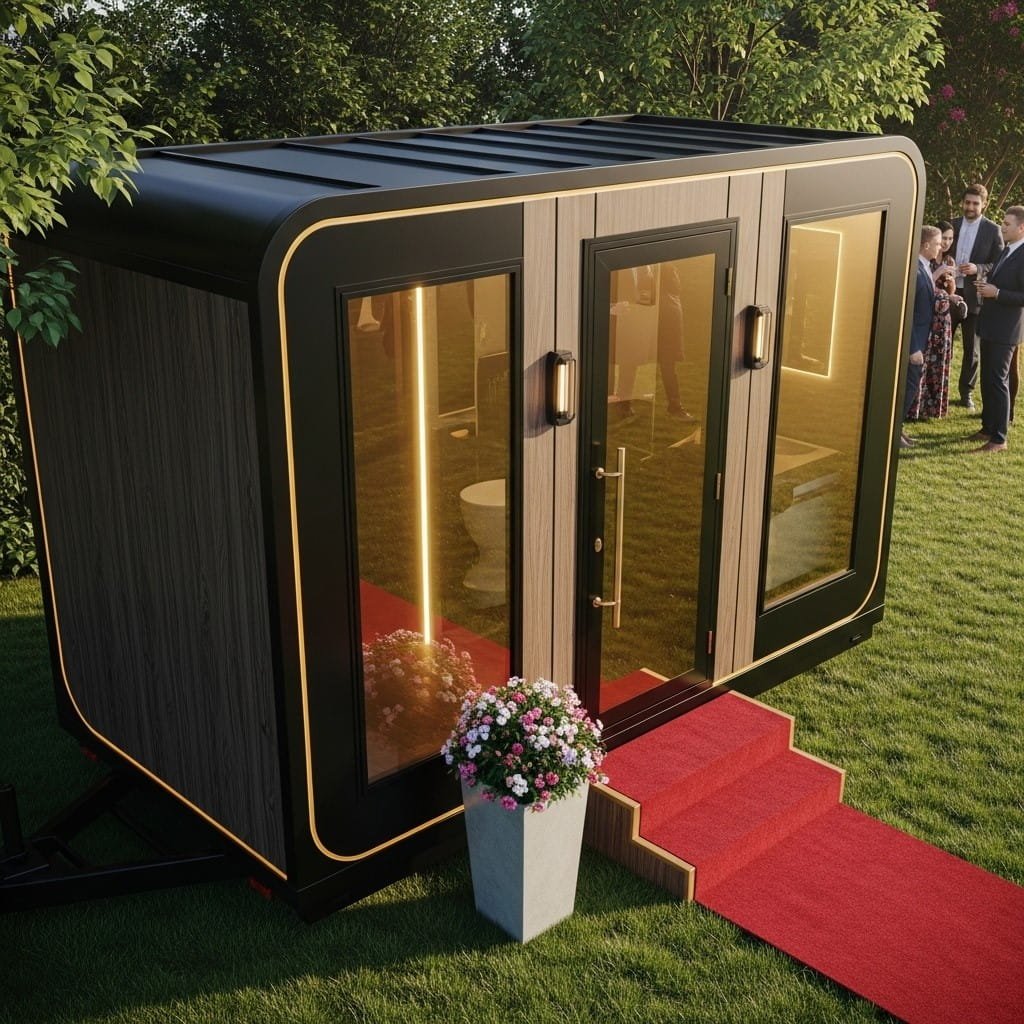
A VIP restroom trailer is a towed unit with separate private suites, flushing china toilets, countertop vanity sinks with mirrors, interior lighting, and usually heating and air conditioning. The interior is built around the sink rather than around a tank.
- Strength: closest thing to an indoor bathroom. Several private suites arrive in one delivery.
- Limit: needs level ground, a clear access route wide enough for towing, and in most cases a power source. It’s also the most expensive option.
- Best for: weddings, corporate events, VIP and sponsor areas, executive sites.
How Much Water Does Each Type Hold?
A sink with an empty tank is worse than no sink, because people queue for it and walk away. Published equipment specs give a realistic picture of freestanding stations:
- A common two-station portable sink carries roughly a 22-gallon fresh water tank and a 23-gallon wastewater tank, run by a foot pump.
- Wash counts vary by model. One 22-gallon dual station is rated at close to 300 handwashes per fill, another manufacturer describes a 22-gallon unit as delivering around 1,400 pumps of water, and a supplier cost guide puts a two-person station at roughly 600 to 700 washes and a four-person station at about 1,000.
- A four-station skid-mounted pod holds far more, around a 65-gallon fresh water tank and a 95-gallon wastewater tank, battery or solar powered, with a water heater on some models.
Built-in sinks inside deluxe flushable units hold less than freestanding stations, because they share the cabin with the toilet’s own water supply.
Practical rule: a single small station comfortably covers a few hundred uses, not a full day of heavy festival traffic. Give your provider the headcount and hours so they can size the station or schedule a mid-event refill.
Portable Restroom With Sink Prices
| Type | Typical Daily Rate | Typical Monthly Rate |
|---|---|---|
| Standard porta potty (no sink, for reference) | $100 – $175 | $125 – $250 |
| Deluxe flushable unit with built-in sink | $150 – $250 | $200 – $350 |
| ADA-compliant unit | $175 – $300 | $225 – $375 |
| VIP restroom trailer (2–3 stalls) | $600 – $1,200 | $2,000 – $4,000+ |
| Standalone handwashing station | Quoted separately — see below | — |
Adding a built-in sink and flush to a standard unit costs roughly $50 to $100 more per unit per day.
Standalone handwashing stations are quoted as their own line item, and published 2026 ranges differ by market and model: one metro guide lists about $100 to $350 per week, a national guide $250 to $500 per week, and another source cites around $155 per week. Ask for a station price alongside your toilet quote rather than pricing it separately.
For a full breakdown of rates by unit type and rental length, see our porta potty rental cost guide.
What’s Included in the Rental
Most rentals commonly include the unit delivered clean and sanitized, placement on your site, supplies such as toilet paper and soap, scheduled servicing on multi-week rentals, and pickup at the end. Inclusions vary by provider and rental length, so confirm before booking.
A sink changes what a service visit involves. A standard porta potty has one tank to pump. A sink-equipped unit or station has three jobs: pump the waste, empty the grey water, refill the fresh water, plus restock soap and paper towels. That means service visits take longer, high-traffic events may need a scheduled mid-event refill, and the technician needs to reach the unit with a hose and pump line on service day.
What Pushes the Price Up
- Unit type. Trailers cost several times more than porta potties.
- Rental length. Longer rentals cost far less per day, because delivery and pickup are one-time costs.
- Number of units. Adding units to the same delivery spreads the transport cost.
- Service frequency. Extra visits beyond the included schedule are billed per visit.
- Delivery distance and site access. Remote or hard-to-reach sites carry added charges at most companies.
- Season and timing. Summer and fall weekends are the industry’s busiest, and rush or after-hours delivery can cost extra.
- Cold weather. Anything with running water can freeze, so winter rentals may need winterization.
How to Choose the Right One
Match the Type to Your Use Case
| Your Situation | Best Choice | Why |
|---|---|---|
| Wedding, guests will use it | VIP restroom trailer | Vanity sinks, mirrors, lighting, climate control, several suites in one delivery |
| Wedding on a tighter budget, or a site a trailer can’t reach | Deluxe flushable units | Built-in sink and flush without trailer cost or access requirements |
| Festival or public event | Standard units + handwashing stations | Highest washing capacity per dollar across a crowd |
| Event with food vendors | Standalone stations in the vendor area | Vendor handwashing is usually a separate permit condition |
| Construction site | Standalone station beside the toilets | Durable under daily crew use; water supply separate from the toilet |
| Client-facing job site or model home | Deluxe flushable units | Better appearance for a modest monthly increase |
| Staff, band, and catering areas at any event | Deluxe flushable units | Keeps guest lines short without a second trailer |
A mix often works best. Many wedding planners put a trailer in the guest zone and one or two deluxe units in the vendor zone.
Check Whether a Sink Is Required
On construction sites, usually yes. OSHA’s construction sanitation standard, 29 CFR 1926.51(f)(3), states that lavatories shall be made available in all places of employment, each with hot and cold running water or tepid running water, hand soap or a similar cleansing agent, and individual hand towels, air blowers, or clean sections of continuous cloth toweling. The rule exempts mobile crews and normally unattended work locations where workers have transportation readily available to nearby washing facilities.
A separate provision, 1926.51(f)(1), requires adequate washing facilities for workers applying paints, coatings, herbicides or insecticides, or in other operations where contaminants may be harmful. OSHA has clarified that this reaches beyond painting to any activity involving harmful contaminants. OSHA has also stated that rags and waterless hand cleaner would typically fail to remove harmful contaminants, and its guidance says waterless cleaner and towels are not adequate substitutes for soap and water.
One more OSHA detail worth planning around: workers may not eat or drink inside a toilet room, so crews need washing capacity near the break area, not only at the toilets.
At events, the requirement usually comes from your health department, and food service is the trigger. Health department checklists based on the FDA Food Code require a handwashing station in each food booth or mobile unit with warm running water, soap, and paper towels, unless the vendor sells only prepackaged food, and they state that hand sanitizer is not an acceptable substitute. In California, temporary food facilities operating three days or less may use a container providing a hands-free continuous stream of warm water, while longer operations need an approved sink with pressurized hot and cold water.
Accessibility applies too. The U.S. Access Board’s guide to the 2010 ADA Standards explains that where single-user portable units are clustered at one location, at least 5%, and never fewer than one per cluster, must be accessible, with units for construction personnel on construction sites exempt. If you need an ADA-compliant unit, request it specifically and make sure any sink beside it has a clear, level approach. Rapid also offers handicap portable toilets.
Check the Site Before You Book
The site often decides the type for you:
- Ground surface — trailers need level, firm ground; wet grass is a problem for anything towed.
- Access route — measure gates and driveways before booking a trailer.
- Power — most trailers need a power source for lighting and climate control.
- Temperature — running water can freeze, so ask about winterization for cold-weather dates.
- Placement distance — close enough to be used, far enough from food prep and photos.
- Service truck parking — if the truck can’t reach the unit on service day, you may face a return-trip charge.
The 5-Question Shortcut
- Who uses it? Guests and clients justify a trailer or deluxe units. Crews and general crowds are better served by standard units plus stations.
- How many people, for how many hours? This sets both the toilet count and the water capacity.
- Is food being served? If yes, budget separate stations for the vendor area.
- Is this a workplace? If yes, OSHA’s lavatory requirement applies and a sink isn’t optional.
- Can the site take a trailer? Ground, access width, and power decide this before budget does.
Not sure which type fits? Send Rapid Porta Potty your location, dates, headcount or crew size, and whether food or alcohol will be served, and we’ll recommend the right mix of units and washing capacity with a firm price. Request a free quote or call (833) 435-8666. We deliver nationwide, check your state.
FAQs
Do porta potties come with sinks?
Standard porta potties don’t. They typically include a toilet, urinal, toilet paper, and a hand sanitizer dispenser. To get a sink you need a deluxe flushable unit with a built-in basin, a standalone handwashing station beside the toilets, or a restroom trailer with vanity sinks.
What’s the difference between a porta potty with a sink and a handwashing station?
A porta potty with a sink has a small basin inside the cabin, so one person uses both at a time. A handwashing station is a separate freestanding unit with two or four basins serving a whole bank of toilets. Stations give more capacity; built-in sinks give more privacy.
Does the sink have real running water?
Yes, supplied from an onboard fresh water tank rather than a plumbed line, draining into a grey water tank. Most use a foot pump so the faucet is hands-free. Some larger station models include a water heater.
Is hand sanitizer enough instead of a sink?
Not in most regulated situations. OSHA guidance states waterless hand cleaner and towels are not adequate substitutes for soap and water, and health department food vendor checklists say sanitizer doesn’t replace a required handwashing setup.
How much more does a unit with a sink cost?
A deluxe flushable unit with a built-in sink typically runs $150–$250 per day against $100–$175 for a standard unit, so roughly $50–$100 more per day. Standalone stations are quoted separately.
How many people can use a handwashing station before it needs a refill?
It depends on the model. A common two-basin station holds about 22 gallons, and manufacturer and supplier estimates for that size range from roughly 300 to 700 washes per fill. Four-station pods hold around 65 gallons and serve considerably more.
Can I use a portable sink in winter?
Yes, with preparation. Tanks and water lines can freeze, so cold-weather rentals may need winterization, and some models offer heated water. Give your provider the dates and location.
Do I need a sink at a wedding with porta potties?
There may be no legal requirement for a private event on private property, but guests notice. A trailer or deluxe flushable units solve it inside the unit. With standard units, add at least one handwashing station beside them.
Is a restroom trailer worth it over deluxe porta potties?
For guest-facing events needing several private suites at once, a trailer usually delivers better comfort per guest. For job sites, staff areas, and overflow, deluxe flushable units are more economical. Site access and power often settle it.
How far ahead should I book?
Earlier than for standard units, especially for trailers in peak wedding and festival season, since trailer inventory is limited in most markets.